
What To Wear On Range Day
Your clothing should allow you to move safely, comfortably and confidently throughout the training day. Since all AEDA range training is conducted outdoors, plan for weather, movement and hot brass.
Visual Examples
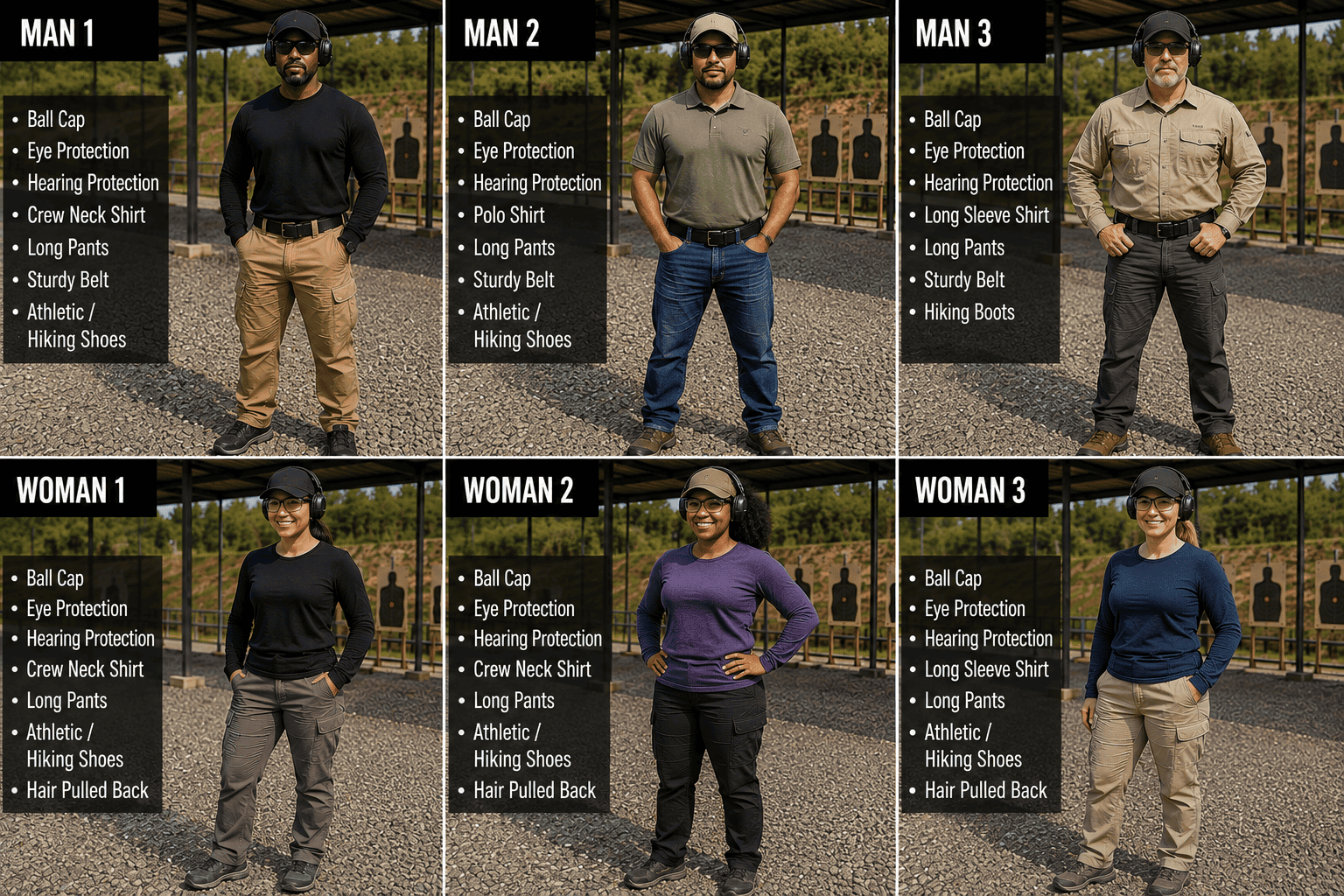
For Everyone
✅ Eye Protection (Required)
Protects your eyes from debris, ejected brass and other range hazards.
✅ Hearing Protection (Required)
Electronic hearing protection is recommended so you can clearly hear range commands while protecting your hearing.
✅ Closed-Toe Shoes (Required)
Wear sturdy athletic or hiking shoes with good traction.
Avoid:
- Sandals
- Flip-flops
- Open-toe shoes
- High heels
✅ Long Pants (Strongly Recommended)
Long pants help protect against:
- Hot brass
- Gravel
- Dirt
- Scratches
- Kneeling during drills
Jeans or durable outdoor pants work well.
✅ Comfortable Shirt
- Choose clothing that allows unrestricted movement.
- A higher neckline is recommended to help prevent hot brass from entering your shirt.
✅ Weather Appropriate Clothing
- Outdoor ranges can become hot, cold, windy or wet.
- Dress in layers when appropriate.
- Bring rain gear if conditions require it.
For Men
Recommended:
- Ball cap (helps deflect hot brass and reduce sun exposure)
- Crew-neck T-shirt or polo
- Long pants
- Sturdy belt (especially if wearing a holster)
- Comfortable shoes or boots
Optional:
- Lightweight long sleeves for additional sun protection
Avoid:
- Tank tops
- Open footwear
- Extremely loose clothing that could interfere with equipment
For Women
Recommended:
- Hair secured in a ponytail, braid or bun so it doesn’t obstruct vision or become caught in hearing protection.
- Crew-neck or higher neckline shirt to reduce the chance of hot brass entering clothing.
- Long pants or outdoor training pants that allow comfortable movement.
- Comfortable athletic or hiking shoes.
- Ball cap (recommended for sun protection and to help redirect hot brass).
Optional:
- Lightweight long sleeves for additional protection from sun and brass.
Avoid:
- Low-cut necklines
- Open-toe shoes
- Flowing scarves or loose accessories
- Excessively loose sleeves that may interfere with equipment
During Training
Depending on the class, students may:
- Walk on uneven gravel
- Stand for extended periods
- Kneel during drills
- Move between shooting positions
- Work in warm or cool weather
Dress for movement rather than appearance.
A Few Helpful Items To Bring
- Water bottle
- Sunscreen
- Bug spray (seasonal)
- Small towel (summer months)
- Light jacket or rain layer (when needed)
- Notebook and pen
Our Goal
We want you focused on learning—not distracted by uncomfortable clothing, changing weather or preventable safety issues.
Prepare before it matters.
View our FAQ Page for more details about AEDA.